Tuesday, December 20, 2011

Bombing George Stanley's "Birth of Western Canada", 1940

Getting rich and famous by writing Canadian history is a rare feat.  It is hard enough to turn a profit in a niche market with a limited population of book buyers, let alone trying to do so against the best efforts of the Luftwaffe!  In the case of George F.G. Stanley's classic The Birth of Western Canada: A History of the Riel Rebellions, enemy bombing was added to the normal market problems of the Canadian historian.

Born in Calgary in 1907, Riel historian and political scientist Thomas Flanagan noted in a 1992 edition of The Birth of Western Canada that Stanley had early Métis and Sarcee acquaintances.  He began studying at the University of Alberta before a Rhodes Scholarship sent him to Oxford, where he began  work on his doctoral dissertation in 1931.  In 1936, Stanley signed a contract with Longmans Green to publish his work. The book received modest attention and sold several hundred copies over the next several years.

Herbert Mason's Iconic Photo of St. James
Cathedral, 30 Dec. 1940
On 29-30 December 1940, the Luftwaffe put the end to Stanley's sales, when bombing raids destroyed the entire Longmans stock.  As Stanley  wrote in 1960, "one of the minor casualties of this raid was the destruction of the premises of Longmans, Green and Company on Paternoster Row, and the loss of the remaining copies of the original edition of this book. [...] The book thus became, by accident of war rather than by deliberate policy on the part of the publishers, a very limited edition." (Stanley, Birth, 1992, xviii) It was not until 1961 that the book became readily available again when the University of Toronto Press purchased the copyright and eventually printed another seven batches of the book.

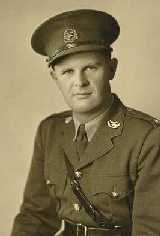
Cpt. Stanley 1940 St.FX Bio Page
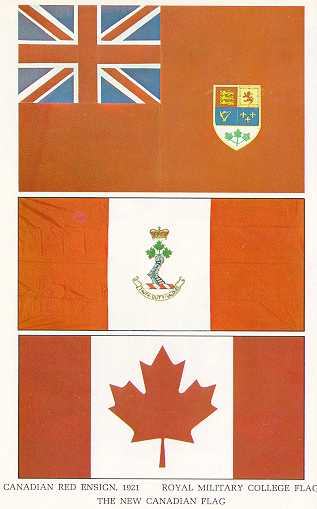
As for George Stanley, he left a teaching position at Mount Allison University in New Brunswick to serve in the Historical Section of the Canadian army.  By the end of the war he was acting as deputy director.  His direct superior was none other than the legendary Canadian military historian C.P. Stacey.  Stanley continued along this military bent for much of his career, serving at the Royal Military College of Canada for two decades.  Despite his incredible contributions to Canadian history, Stanley is best known as the designer of the modern Canadian flag.  Even in this act Stanley's military influences are shown.  He took his inspiration from the layout of the RMC's banner.


Friday, December 16, 2011

Affectionate Vehicle Names: Crerar vs. Vokes, 1944.

Crerar goes to France
Department of National Defence /
Library and Archives Canada.
Many of us name our vehicles.  They do seem to be animate enough to deserve a nickname, be it "Ol Betsy", "Rusty", or "The Green Bandit."  Soldiers, too, wished to name their vehicles and for the Canadians in Italy, their right to do so became a contentious issue as the I Canadian Corps was being formed.  General Harry Crerar, known for spit and polish discipline, arrived in the Italian theatre convinced that the 1st Canadian Division needed to shape up, and the painting of non-standard letters on vehicles was one aspect which needed to go.

General Chris Vokes, took a different attitude towards the naming of vehicles.  As Vokes put it, "in war a soldier craves affection.  He also craves something on which to lavish his affection: Jeeps, trucks, dogs, women, any damn thing he can get his hands on, even ducks and geese." (Vokes, My Story, 153)  He noted that for the truck driver, this need to show his affection to his vehicle was an extension from the days of the cavalry, when a soldier loved his horse.  Vokes explained in his direct manner, "he'll paint his girl's name on the engine hood, or his wife's, or some old whore's name, it couldn't really mater.  The vehicle is henceforth called by that name, and given tender loving care - proper maintenance."

Crerar finally yielded on the naming of vehicles, but insisted that names would have to be in letters no more than one inch high, inside the cab, on the dash.  Reportedly, in a weeks time, acts of defiance were all too visible.  Names were scrawled loud and proud, "once more sprouting from engine hoods, in the largest possible letters."

The naming of tanks had long been practiced in the Canadian Armoured Corps.  Tanks usually started with the squadron letter.  Tanks of "A" squadron would all begin with the letter A.  An entry in the 5 Canadian Armoured Brigade diary, noted that in the multi-ethnic Eighth Army, one tank's name would have to be altered for reasons of religious sensitivity.  The intelligence officer wrote, "A tk which was named ALLAH has had the name changed to ATILLA.  Indian tps may have been offended at the original name."

Lance-Corporal M. R. Leonard examining the "Little Henry" painting on a Sherman tank of the Three Rivers Regiment near Lucera, Italy, 21 October 1943.Credit: Lieut. Frederick G. Whitcombe / Canada. Dept. of National Defence / Library and Archives Canada / PA-201363

Saturday, December 10, 2011

Calgary City Development, Fun Facts from 1883-1914

Beverly A. Sandalack and Andrei Nicolai's The Calgary Project: urban form/ urban life (2006) plots the planning and development of Calgary from its beginnings to the present and even speculates on the future for the sprawling metropolis.  The initial stage of Calgarian development was shaped by the Canadian Pacific Railway's selection of the southern route through the new city, and the later placement of major mechanical shops in Ogden.  The fire of 1896 punctuates the early period of urban growth, which ended with the end of large-scale immigration at the outbreak of the Great War.

An interesting feature of Calgary's planning in the early days was the offsetting of Calgary's street grid from the dominion lands survey by three degrees.  As the authors note, the correction of these two grids at certain points in the city makes for interesting spaces. (Sandalack, p.8)  One such correction can be observed in 17th Avenue's Tomkins Park.  The City of Calgary's website notes, "Tomkins Park was established in 1915 on land donated by Henry & Elinor Tomkins."
This map of the streets binding Tomkins Park shows 17th Ave S as a correction line for the offset grid system. Google maps.
 Another interesting factoid of early Calgarian development was the lack of regard for the Bow riverfront as a valuable green space.  In 1886, Peter Prince set up his Eau Claire Lumber Company on what was to become Prince's Island park.  He excavated the head of the peninsula to divert water to a waterwheel which ran the sawmill.  This situation drew other manufacturing interests to nearby lots, and town council would grant remarkable control to the sawmill over the banks of the Bow.  As Sandalack and Nicolai write, "by the end of the century, this attitude of civic indifference to the river was reinforced by periodic floods, log jams, and the tendency of nearby residents to use the south bank of the Bow River as a dumping ground for refuse." (Sandalack, p.9)

Eau Claire lumber mill, Calgary, Alberta. 1880s. Glenbow Musuem and Archives. Image No: NA-1015-2

The Calgary Project provides an interesting overview of the city's development, and contains a number of interesting maps of the greater city and representative neighbourhoods.